
How to Evaluate RSPS Combat Before You Commit
Learn how to evaluate RSPS combat through hit timing, PvP balance, PvM mechanics, gear progression, and active player feedback before you fully invest time.
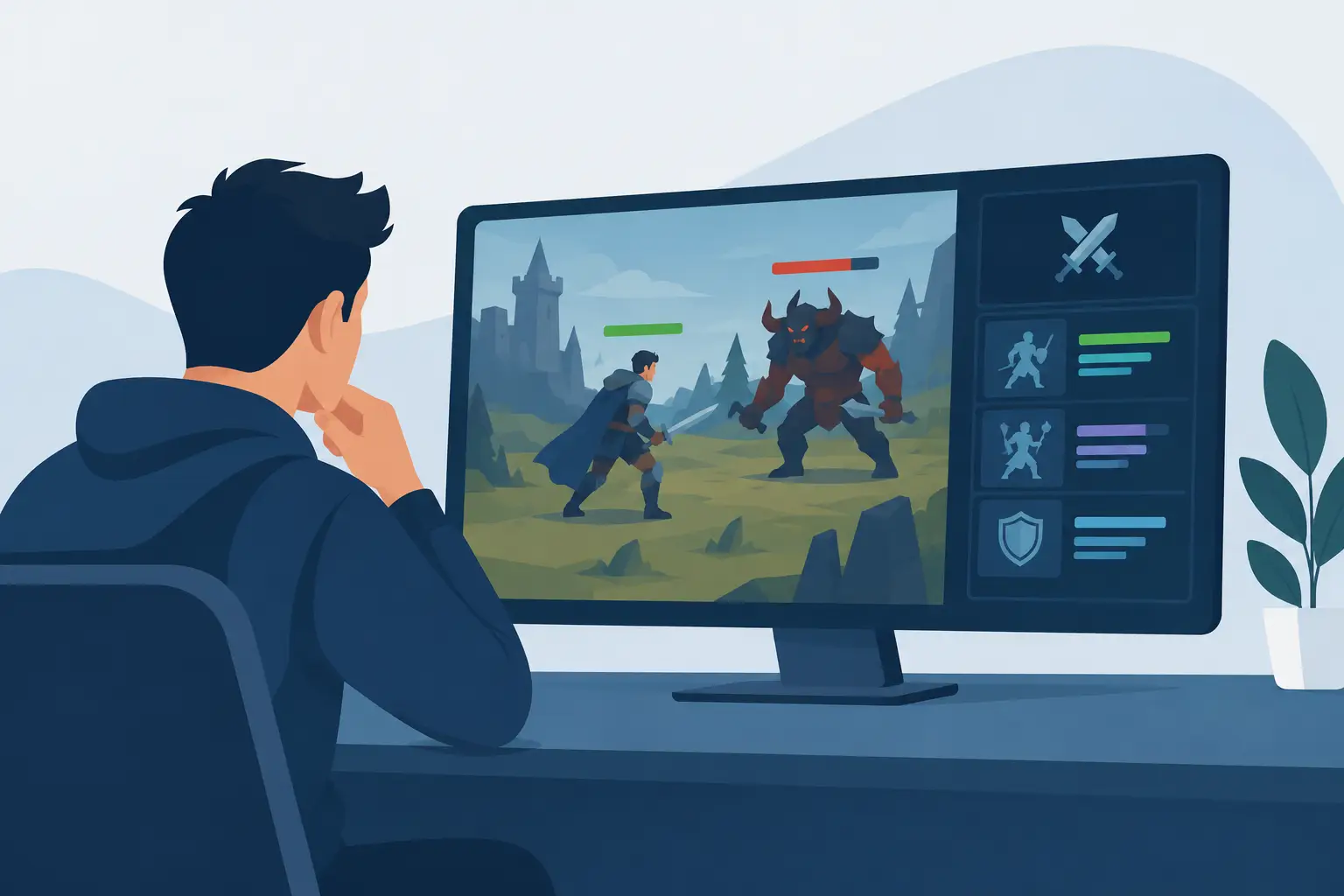
A server can have a polished launcher, a high player count, and a crowded spawn area, then lose you the moment the first fight starts. Knowing how to evaluate RSPS combat before committing your time comes down to more than checking whether special attacks work. You are testing whether the combat system feels responsive, fair, and built to support the kind of gameplay the server promises.
For a PvP server, that means accurate timing, meaningful risk, and builds that do not boil down to one weapon. For a PvM or economy server, it means bosses with readable mechanics, rewarding progression, and encounters that stay interesting after the first clear. The goal is not to find a server with every feature. It is to find one where combat has a clear standard and the community is actively playing it.
Start With the Server's Combat Identity
Every RSPS makes a combat choice, whether it states one clearly or not. Some aim for Old School-style mechanics and familiar PvP brackets. Others use custom items, modern RuneScape abilities, pre-EoC content, or a hybrid of several eras. None of these approaches is automatically better. The problem starts when the server advertises one experience and delivers another.
Read the server description, game mode tags, update posts, and player discussion before logging in. A server promoting deep OSRS PvP should be judged against expectations for prayer switching, weapon timing, movement, PID behavior, and risk. A custom PvM server should be judged on whether its original systems work together rather than whether it copies every retail mechanic exactly.
Ask a simple question: what does this server want combat to be? If the answer is unclear after ten minutes in-game, progression and balance are likely unclear too.
Check Core Combat Before Chasing Endgame Gear
Do not begin your test with maxed gear, a rare boss, or a high-risk fight. Start with basic attacks, common weapons, food, prayers, and an ordinary NPC. Core behavior exposes weak combat systems quickly.
Test timing, switching, and feedback
Combat should give you reliable visual and mechanical feedback. When you click to attack, switch a prayer, eat food, or change gear, the result should happen when you expect it to happen. Minor differences between server revisions are normal. Random delays, skipped inputs, and inconsistent hit splats are not.
Pay attention to attack cycles. Does a weapon feel like it fires or swings at a believable pace? Can players stack damage in ways that ignore normal cooldowns? Does eating cancel actions too aggressively, or not enough? These details decide whether PvP feels skill-based or messy.
Also test common edge cases. Try switching weapons during an attack, moving under an NPC, using a special attack after eating, and changing prayers under pressure. You do not need to know every engine detail. You only need to notice whether the outcomes are consistent across repeated attempts.
Look for working defensive choices
Good combat gives players ways to respond. Protection prayers, armor bonuses, movement, food, freezing, and escape routes should each matter in the situations where they are supposed to matter.
If one protection prayer makes an entire boss trivial, PvM becomes a gear check. If defense levels and armor barely affect PvP damage, build diversity disappears. If freezes are unavoidable or teleports remove all risk, the server has likely missed the balance point. Strong combat creates pressure without making players feel helpless.
Evaluate RSPS Combat Through PvP Balance
PvP is where flawed mechanics become visible fastest because players immediately test every advantage. You do not need to be a top bridder or deep-wilderness PKer to evaluate the basics. Spend time in the server's most active PvP area and watch what experienced players use.
A healthy meta has recognizable strong options without a single mandatory setup. If nearly every player uses the same weapon, spec combination, and armor path, ask why. It may be a temporary trend after an update. More often, it signals that other equipment lacks a real role.
Check whether combat brackets make sense. Pure, zerker, med-level, and max accounts should have reasons to exist if the server supports them. A server can intentionally focus on one bracket, but it should not pretend to offer broad PvP while every fight is decided by max gear and a one-hit special attack.
Risk is another useful signal. In a serious PK economy, valuable wins should feel valuable and deaths should carry a cost. That does not require punishing losses for casual players. It does require enough risk to prevent endlessly disposable loadouts from flattening the stakes.
Watch the community response to balance concerns as well. Players will always complain after dying. What matters is whether the same issues come up repeatedly: broken specs, impossible freeze timers, inaccurate weapons, or staff-only items dominating public fights. Repeated reports with no clear response are a warning sign.
Test PvM for More Than Drop Rates
High drop rates can make a server feel rewarding for a weekend. They cannot carry weak PvM for long. When evaluating bosses, look at the fight itself before calculating the loot per hour.
A good encounter has readable attacks, opportunities to react, and rewards connected to its difficulty. Mechanics can be simple and still work well. A boss does not need ten phases to be engaging. But standing still, clicking once, and waiting for a loot beam is not meaningful PvM unless the server is openly designed as an idle progression experience.
Try content at different levels. Early-game monsters reveal whether new players have a logical path. Mid-game bosses reveal whether upgrades change how you play. Endgame content reveals whether rare gear expands options or simply raises damage numbers.
Pay close attention to damage caps, immunity phases, and forced mechanics. These tools can prevent overpowered gear from deleting content, but overuse makes combat feel artificial. If every boss ignores half the available equipment or spends most of the fight untouchable, the server may be masking balance problems instead of solving them.
Follow the Gear and Economy Loop
Combat balance does not exist separately from the economy. A weapon can be mechanically balanced but still damage the server if it is too easy to obtain, too cheap to maintain, or required for every activity.
Check how players acquire combat upgrades. Are there multiple viable routes through PvM, skilling, trading, PvP, or achievements? Is there a clear gap between starter gear and endgame gear, with useful milestones in between? A healthy progression loop gives players practical targets without making early equipment instantly worthless.
Custom items deserve extra scrutiny. They can add personality and keep a server from feeling like a copy of every other RSPS. They should also have transparent stats, clear sources, and limits that respect existing gear. When custom weapons outclass everything with no trade-off, players who miss an event, cannot donate, or lack access to a rare drop are pushed out of the combat loop.
Use Activity Signals to Validate What You See
Combat can look excellent in a showcase video and feel empty in a live server. Verify that players are actually fighting bosses, entering minigames, PKing, and trading combat gear at the times you plan to play.
Server listings are useful here because uptime, real votes, and recent activity provide context before you download anything. On Runix, compare those signals with the server's claimed focus. A high-ranking PvP server with stable uptime and active votes is more likely to offer available opponents than a polished listing with little current momentum. It is still a starting point, not proof of balance.
Once in-game, check public chat, clan activity, tournaments, wilderness hotspots, and group-finding channels. An active community can keep a slightly imperfect combat system fun while the team improves it. A quiet community makes even well-built content harder to enjoy, especially when bosses require groups or PvP depends on matching opponents.
Judge the Team by Its Combat Decisions
No RSPS launches with perfect combat. The stronger signal is how the team handles known issues. Look for specific patch notes that explain changes to accuracy, damage, NPC behavior, item effects, or drop tables. Vague claims about “combat improvements” do not tell players much.
Good teams state the problem, make a measured adjustment, and watch the outcome. They avoid reacting to every complaint with a massive buff or nerf. That restraint matters because combat changes affect PKers, PvM players, ironmen, merchants, and newer accounts differently.
Before you settle in, give the server a short but deliberate test session. Fight ordinary NPCs, attempt one meaningful boss, watch a few PvP encounters, inspect the gear path, and ask active players what they are currently grinding. The right server will make its combat identity obvious through play, not promises.