
Custom RSPS vs OSRS: Which Fits You?
Custom RSPS vs OSRS comes down to speed, freedom, and risk. See how progression, economy, PvP, and uptime shape the better fit.
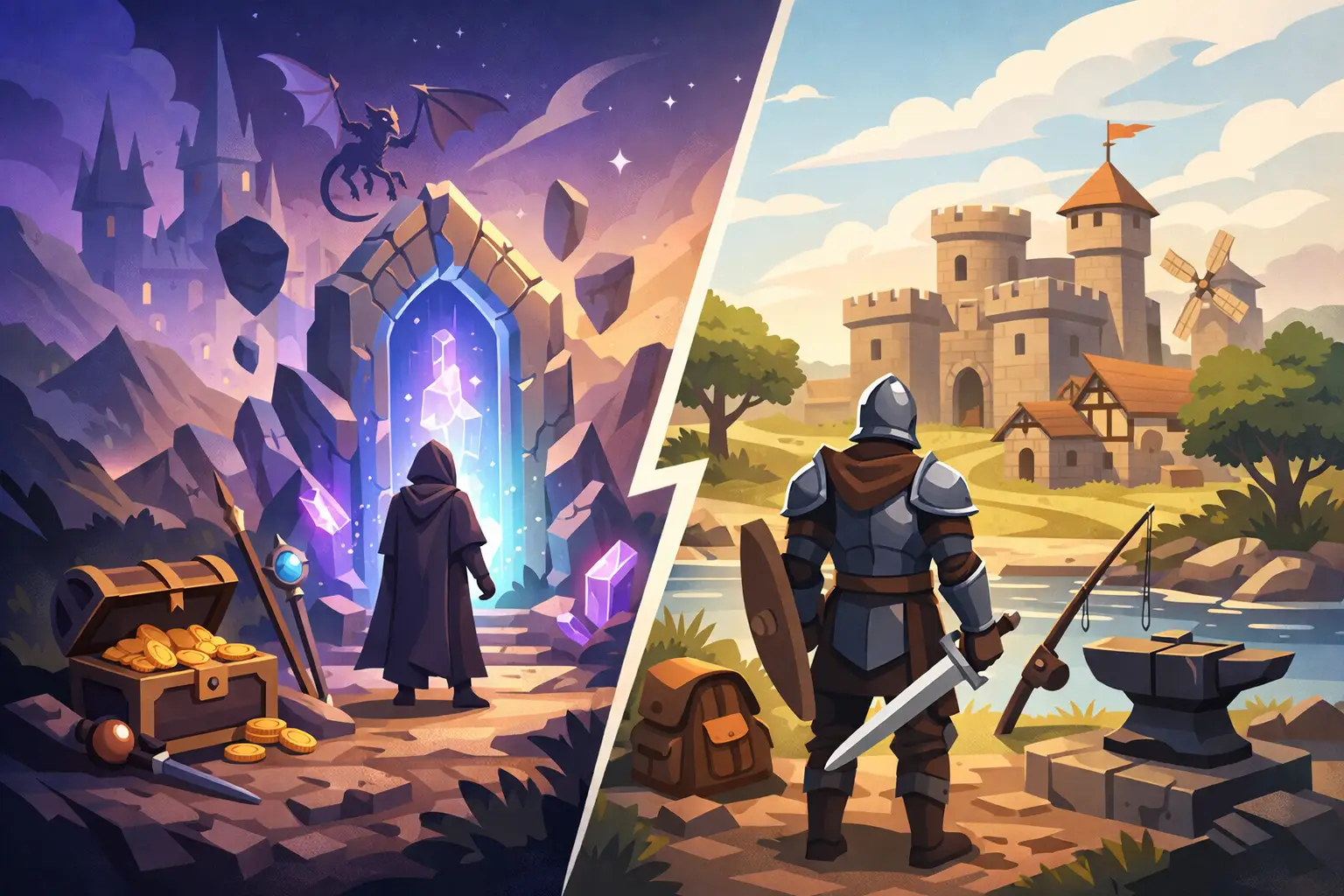
If you've ever logged into Old School RuneScape, looked at the grind ahead, and thought, I want the combat and nostalgia without the same pace, you're already in the middle of the custom rsps vs osrs decision. This is not just a choice between official and private. It is a choice between two very different gameplay models, two different communities, and two different expectations around progress, balance, and trust.
For players, the real question is simple: do you want a known long-term game with fixed rules, or a faster, more flexible server that can reshape the experience? For owners, the question shifts: are you building around nostalgia, or are you competing on innovation, retention, and uptime? Both sides matter because the RSPS market only works when players can quickly identify which servers are active, credible, and worth their time.
Custom RSPS vs OSRS: The core difference
OSRS is the official product. Its value comes from consistency, scale, and permanence. You know what the game is, how the economy broadly behaves, and what long-term progression looks like. Updates may change the meta, but the foundation is stable. When you invest time into an account, there is confidence that your progress lives inside a large, established ecosystem.
Custom RSPS works differently. It uses RuneScape as a base but changes the rules. That can mean custom bosses, altered skills, revised XP rates, new gear paths, teleports, QoL systems, donor mechanics, or entirely custom game loops. The best custom servers are not trying to copy OSRS exactly. They are trying to offer a sharper pitch: faster PvP access, denser PvM, more active early progression, or unique content that official OSRS will never ship.
That difference shapes everything else. OSRS asks for patience. Custom RSPS usually sells speed, variety, or novelty.
Progression speed changes the whole experience
The biggest split in custom rsps vs osrs is progression.
In OSRS, progression is slow by design. That pace is part of the game's identity. Levels, gear upgrades, quest unlocks, and account milestones matter because they take time. The grind creates value. A fire cape, a maxed skill, or a rare drop means something partly because it was not instant.
In a custom RSPS, progression often starts faster and stays faster. Players may spawn with starter gear, use teleports to skip dead travel time, train at boosted rates, and reach PvP or bossing content on day one. That appeals to players who already know the official route and do not need to repeat it for the tenth time.
But faster is not automatically better. If progression is too easy, items lose meaning, server lifespan shrinks, and retention drops. A strong custom server understands pacing. It removes wasted time without removing the need to play. That balance is difficult, and it is one of the clearest signals of whether a server is built for long-term growth or short-term hype.
Economy and item value are not equal
OSRS has a deep economy backed by huge player volume. Even with price swings and update-driven volatility, there is a broad market logic behind item value. Supply, demand, and activity at scale keep the economy recognizable.
Custom RSPS economies are much more fragile. Population size matters more. Drop tables matter more. Staff decisions matter more. One overpowered boss, one badly priced shop, or one donor package that injects too much gear can distort progression fast. Players feel that immediately.
That does not mean RSPS economies are weak by default. Some are tighter than people expect. A well-run server can create a healthy loop where grind, risk, and reward stay aligned. Still, players should go in with different expectations. In OSRS, the economy is part of a giant system. In custom RSPS, the economy is part of the server's design discipline.
For owners, this is where trust starts. If your economy breaks, ranking position or paid visibility may get players through the door, but they will not stay.
PvP and PvM serve different priorities
A lot of players choose custom servers because they want direct access to the content they actually care about.
If you are PvP-first, OSRS can feel slow unless your account is already built. Custom RSPS often removes that barrier with instant loadouts, hybrid presets, target systems, and active wilderness loops. That is a real advantage when the goal is action, not account setup.
If you are PvM-first, the comparison gets more nuanced. OSRS offers established boss progression, recognizable mechanics, and the weight of official prestige. Custom RSPS can answer with custom encounters, accelerated gearing, and a denser reward cycle. The trade-off is quality control. Some custom bosses are excellent. Others are just inflated HP with bigger numbers and less polish.
So the better option depends on what you value. If you want official status and long-term account identity, OSRS wins. If you want faster access and more experimental combat loops, custom RSPS often has the edge.
Stability, fairness, and risk matter more in RSPS
This is where players need to be realistic. OSRS has the advantage in institutional trust. The game has known infrastructure, formal support, and a stable long-term presence. That does not make it perfect, but it does make the baseline clear.
With custom RSPS, the quality gap between servers is huge. Some are stable, updated, and professionally managed. Others disappear, wipe, lag, or overpromise. That is why discovery matters. Players are not just choosing content style. They are evaluating uptime, vote activity, community signals, and whether a server looks maintained.
A transparent ranking environment helps here because visibility should not come from noise alone. Real votes, visible activity, and measurable uptime give players a better read on server health before they invest time. For owners, that same transparency raises the bar. If your server is unstable, the market notices.
Why some players leave OSRS for custom RSPS
The move usually is not about hating OSRS. It is about friction.
Some players are burned out on repeating the same early and mid-game path. Some want faster PKing. Some want novelty after years in the official game. Others simply want a tighter gameplay loop where more of their session is spent fighting, looting, or progressing instead of preparing to do those things.
Custom RSPS can also feel more responsive at the community level. Smaller servers often react faster to feedback, run direct events, and shape updates around active player behavior. When that process is handled well, players feel seen. When it is handled badly, balance turns into favoritism. Again, the upside is real, but so is the risk.
Why many players still choose OSRS
OSRS keeps winning on legitimacy, persistence, and scale.
There is value in knowing your account exists in the official version of the game, with massive player recognition behind every achievement. The grind is slower, but that slowness is also what gives the game its identity. For many players, that is the point. They do not want a shortcut. They want the full progression arc, the large economy, and the social status that comes with official milestones.
OSRS also avoids one common RSPS problem: uncertainty. You are not constantly asking whether the server will still be around six months from now, whether staff will rebalance around donor pressure, or whether a wipe is coming. That confidence matters if you play for the long haul.
What server owners should take from custom RSPS vs OSRS
If you run a server, the comparison is useful because it reveals your real competition. You are not competing with OSRS on being official. You are competing on speed, focus, creativity, and convenience.
That means your pitch has to be clear. If your server is custom, what problem does it solve better than OSRS? Faster progression? Better PvP uptime? More rewarding PvM? Cleaner quality-of-life systems? Stronger community events? If that answer is vague, players will leave fast.
It also means visibility alone is not enough. Promotion can drive discovery, but retention comes from server quality. A server can buy spotlight, boosts, or top placement pressure in a competitive directory environment, but if uptime is shaky or progression is poorly tuned, that exposure turns into bounce.
The strongest RSPS operators understand both sides of the market. They build something distinct, then make sure players can verify that it is active, ranked, and worth trying. That is where platforms like Runix fit naturally into the ecosystem - not as hype machines, but as infrastructure for fairer discovery.
So which one should you choose?
Choose OSRS if you want long-term account value, official prestige, and a slower progression model where the grind itself is part of the reward.
Choose custom RSPS if you want faster access to the fun part, more flexible design, and a server that reshapes RuneScape around a specific playstyle.
Neither choice is automatically better. The right answer depends on whether you value permanence or experimentation, scale or specialization, official progression or custom pacing. The useful move is not picking a side on principle. It is picking the experience that matches how you actually play.
If a server makes that choice easier by showing real activity, stable uptime, and a clear gameplay identity, you are already ahead of most players.