
PK RSPS vs Economy: Which Fits You?
PK RSPS vs economy - compare pacing, risk, grind, and retention so players and server owners can choose the right RSPS model for growth.
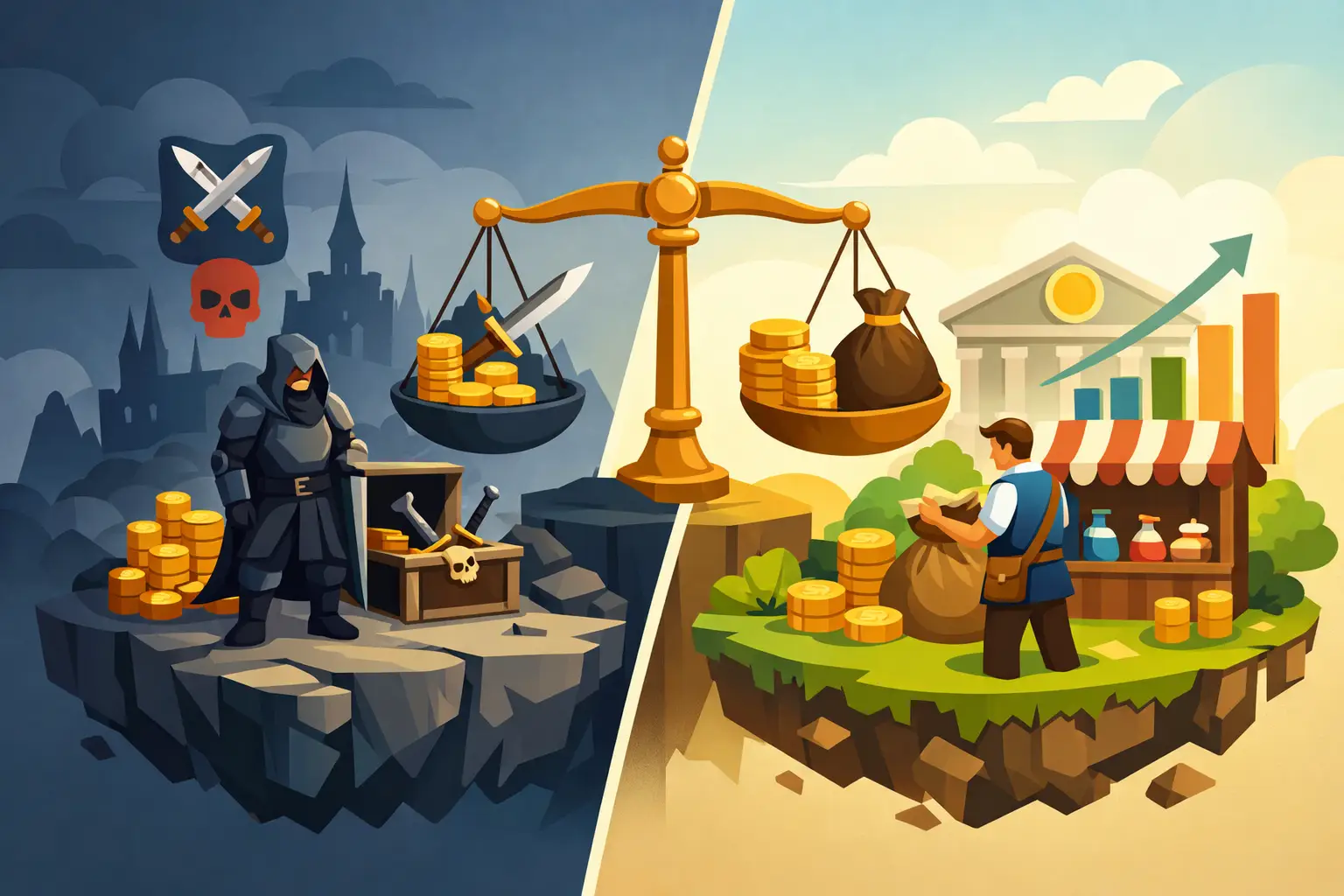
Most players know the feeling within five minutes. You log in, check the starter kit, glance at the online count, and immediately see whether the server is built for fast fights or long-term progression. That is the real split in pk rsps vs economy. One server type pushes you into action almost instantly. The other asks you to stay, build, trade, and progress over time.
For players, this choice decides whether a server feels exciting or exhausting. For owners, it shapes retention, voting behavior, content planning, and how your listing performs when people compare options side by side. If you misread the model, you usually feel it fast - either through shallow engagement or a slow start that never converts.
PK RSPS vs Economy: The Core Difference
A PK RSPS is built around PvP access. The best ones reduce setup friction, speed up gearing, and get players into fights without making them grind for basic viability. That does not mean every pk server is easy mode. It means the main loop is combat pressure, risk, and repeat encounters.
An economy server is built around progression value. Items matter because getting them takes time, skilling has a purpose, drops feed the market, and wealth creation affects status. PvP may still exist, but it is not always the center of the experience. The center is account growth and a working in-game economy.
That sounds simple, but the player expectations are very different. On a pk server, players judge the combat cycle first. On an economy server, they judge progression systems first. If either side is weak, the server loses credibility quickly.
What Players Usually Want From Each Model
PK-focused players usually want fast access, active wilderness zones, fair loadouts, and enough reward tension to make kills matter. They are not looking for a ten-hour setup before their first real fight. They want clean combat systems, strong event cadence, and a population that creates repeat action.
Economy-focused players usually care more about server lifespan, item value, PvM depth, skilling viability, and whether the market feels alive instead of inflated. They can tolerate slower progress if the grind leads somewhere meaningful. If every item is easy to get or if cash floods the game too fast, the whole model starts to collapse.
There is overlap, of course. Some players want both. They like a healthy economy but still want dangerous PvP zones and high-risk fights. That hybrid demand is real, but it only works when the server knows which side leads the design.
Pacing Decides More Than Most Owners Think
Pacing is where pk rsps vs economy stops being a label and starts affecting retention.
PK servers live or die on immediate activity. If a new player cannot get equipped, find opponents, and understand the combat flow fast, the server feels empty even when it is technically online. Momentum matters more here than depth in the first session. Players need a reason to stay in the next hour, not just next month.
Economy servers are the opposite. Their first session still matters, but the real test is whether the second week feels better than the first. Good progression opens up. Bad progression becomes repetitive labor. If players cannot see clear value in skilling, bossing, trading, and account growth, they stop before the server reaches long-term stickiness.
For owners, this changes what should be highlighted. A PK listing benefits from showing action-driven value fast - combat type, risk systems, custom PvP content, tournaments, and active player counts. An economy listing needs proof of stability - progression design, update consistency, working markets, and enough uptime to suggest the server will still matter after players invest time.
The Trade-Offs Are Real
PK servers can generate fast excitement, but they often face a retention problem. When progression barriers are low, players consume the core loop quickly. If there are not enough events, ranking systems, meaningful rewards, or community rivalry, activity can flatten. Fast entry is great. Thin depth is not.
Economy servers often retain better when built well, but they carry a higher trust requirement. Players need confidence that their time investment will not be wasted. If updates are inconsistent, balance changes are reckless, or the economy is poorly managed, the damage lasts longer because the whole model depends on long-term value.
There is also a moderation angle. PK communities tend to be more volatile because competition is immediate and public. Economy communities can be more stable socially, but they are more vulnerable to dupes, inflation, botting, and imbalance. Different model, different pressure points.
PK RSPS vs Economy for New Players
New players usually adapt faster to PK servers because the feedback loop is obvious. Gear up, fight, win or lose, repeat. That clarity is useful, especially for players browsing toplists and trying multiple servers in one session. They can judge quality quickly.
Economy servers ask for more patience. A new player has to understand rates, drop tables, item relevance, custom systems, and whether progression is accelerated enough to feel rewarding without becoming meaningless. That can be a stronger long-term fit, but it is a harder first sell.
This is why presentation matters so much. A player comparing listings is not just choosing content. They are choosing how quickly they can trust the server to respect their time.
What Owners Should Consider Before Picking a Direction
A lot of owners treat this as a branding choice. It is really an operations choice.
If you run a PK server, your content schedule needs to support recurring action. You need events, rewards, anti-abuse controls, and enough combat balance work to keep fights competitive. Population swings hit harder because PvP depends on active opponents. A dead hour feels worse on a PK server than on an economy world.
If you run an economy server, your job is broader and slower. You need progression tuning, item sinks, money sinks, drop balance, skilling relevance, PvM variety, and inflation control. You also need players to believe the server has staying power. Stability becomes part of the product.
Marketing also changes. PK servers often convert better on pure excitement. Economy servers convert better on trust and clarity. For discovery platforms like Runix, that means owners should align their tags, descriptions, and promotional placements with the actual player loop instead of trying to sound broad. Broad usually means forgettable.
Hybrid Servers Can Work, But Only With Clear Priorities
Many servers try to sit in the middle. Sometimes that works. Often it creates confusion.
A hybrid server usually succeeds when one pillar is primary and the other supports it. For example, an economy server can have strong wilderness content and clan PvP without becoming a PK server. A PK server can include progression and item chase without making the economy the main attraction. The problem starts when both sides are underdeveloped or when the server messaging promises everything.
Players read mixed signals fast. If the listing says economy, but endgame value is weak, they leave. If it says PK, but getting fight-ready takes too long, they leave. The strongest servers are usually easy to classify, even when they offer multiple content lanes.
How Players Should Make the Choice Faster
If you play for mechanical intensity, quick sessions, and direct competition, PK is probably the better fit. If you want account ownership, item value, and the satisfaction of building something over time, economy is usually the better fit.
If you are unsure, ask a simpler question. Do you want your next hour to be about fighting or progressing? That one answer cuts through most of the noise.
It also helps to look at signs of health that match the model. On PK servers, active events, fair access to fights, and visible PvP engagement matter more than long feature lists. On economy servers, uptime, update history, and progression depth matter more than flashy starters.
Why This Comparison Matters on a Toplist
Toplists make this distinction sharper because players compare servers quickly and owners compete for attention in the same space. A server does not just need to exist. It needs to present its core loop clearly enough that the right players click, vote, and return.
That is where many listings underperform. They describe features without describing the server's actual identity. In pk rsps vs economy, identity is not a cosmetic detail. It affects acquisition quality. The more accurately a server positions itself, the more likely it attracts players who stay instead of bounce.
The strongest choice is usually not the one with the biggest promise. It is the one with the clearest fit. Pick the server type that matches how you want to play, or build the one you can support consistently, then make that value obvious from the first glance.