
OSRS RSPS vs Custom: Which Fits You?
OSRS RSPS vs custom comes down to gameplay goals, retention, and trust. Compare grind, economy, content, and community before you commit.
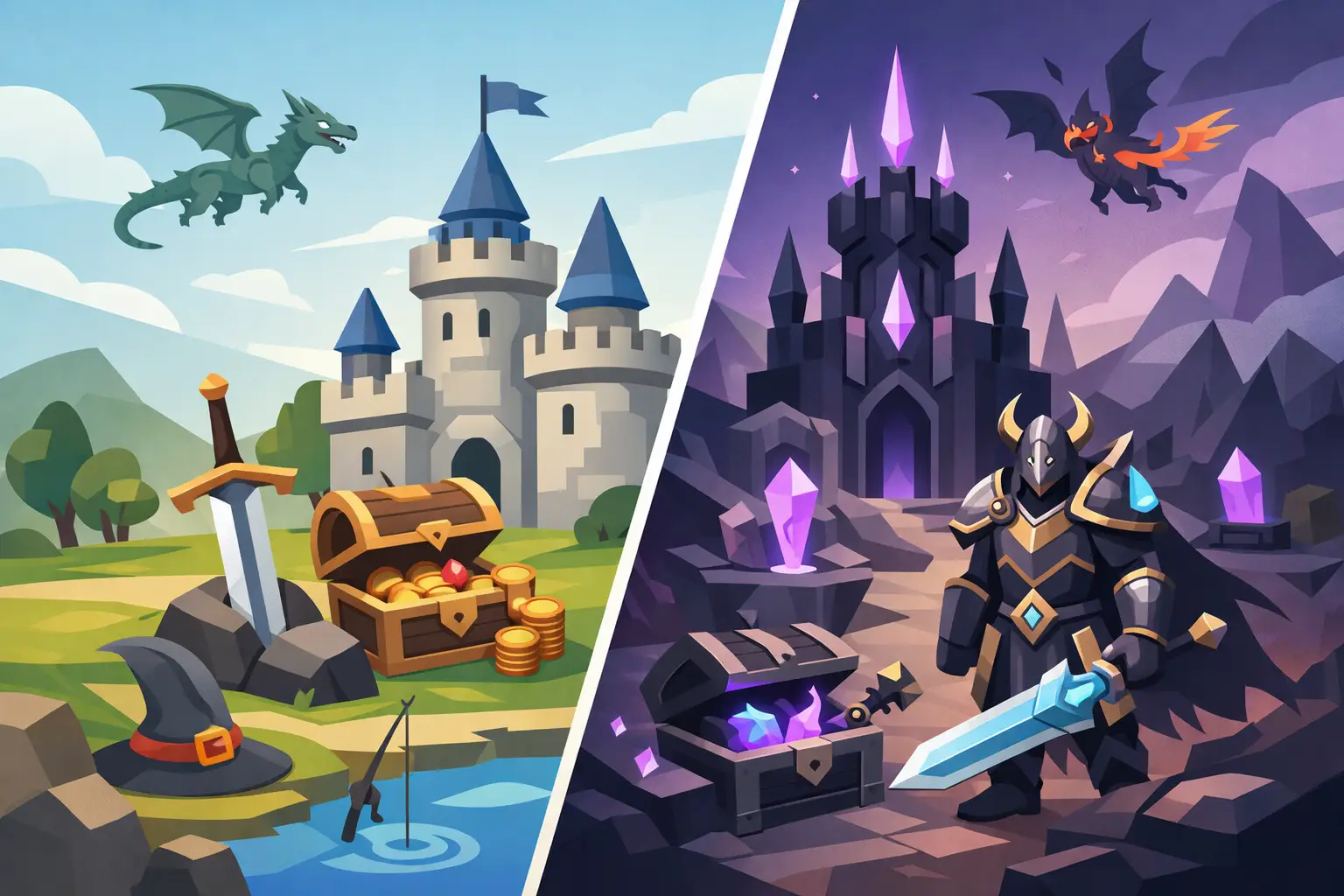
Some players bounce in 10 minutes if the home area feels chaotic. Others stay for months because the progression loop clicks right away. That is really what the osrs rsps vs custom decision comes down to - not which model sounds better on paper, but which one gives players a reason to log in again tomorrow.
For players, this choice affects everything from leveling speed to economy trust to whether PvP feels familiar or completely rebuilt. For server owners, it is even more serious. Your direction shapes your content roadmap, your marketing angle, your retention curve, and the kind of community you attract. Pick the wrong lane, and growth gets expensive fast.
OSRS RSPS vs Custom: The real difference
At a basic level, an OSRS RSPS tries to stay close to Old School RuneScape. The appeal is obvious. Players know the skills, the map, the combat rhythm, the item value hierarchy, and the overall progression logic. Even if rates are changed or quality-of-life features are added, the core experience is still recognizable.
A custom server moves in the other direction. It uses RuneScape as the base but changes major systems, adds unique gear, rewrites progression, introduces custom bosses, or rebuilds the economy around a different pace. Some custom servers still feel adjacent to OSRS. Others are effectively their own game with RuneScape visuals and mechanics underneath.
That difference matters because familiarity lowers friction. When players join an OSRS-based server, they usually understand what success looks like. When they join a custom server, they need to learn your logic first. If that learning curve is exciting, retention can be strong. If it feels messy, they leave.
Why players choose OSRS-style servers
OSRS-style RSPS usually win on accessibility. A player can join, glance at the skill panel, check the shops, maybe test combat, and know within minutes whether the server is for them. There is less confusion and less onboarding overhead.
That makes these servers easier to recommend to friends. If someone says they want a faster OSRS experience, eco progression with less grind, or a PvP environment that feels close to the original game, the pitch is clean. The value proposition is measurable.
There is also more built-in trust when the server stays close to known systems. Players can estimate item value, progression speed, and risk more accurately. They know what an economy should roughly look like. They know whether a drop table seems inflated. They know whether a training path feels balanced. That familiarity helps serious players filter quality quickly.
The trade-off is that OSRS-style servers can blur together. If your server is mostly "OSRS, but easier," that is not a durable differentiator on its own. Players compare details fast - rates, uptime, community activity, wilderness incentives, bossing flow, donation balance, and update consistency. If the server looks familiar but does not outperform competitors in key areas, churn follows.
Why players choose custom servers
Custom servers compete on novelty. They promise a reason to care beyond nostalgia. Sometimes that means new zones, custom item tiers, prestige systems, raid variations, or faster, more dramatic combat loops. Sometimes it means compressing progression so players hit meaningful milestones much sooner.
When custom design is done well, it creates stronger moments. A unique boss mechanic, an original gear path, or a better endgame loop can give players something they cannot get from a standard OSRS clone. That is powerful because novelty drives conversation, and conversation drives traffic.
But custom is harder to execute than it sounds. New content alone is not enough. It has to be readable, balanced, and worth learning. Players do not reward complexity just because it exists. They reward clear progression, stable systems, and content that feels intentional rather than random.
This is where many custom servers lose momentum. They launch with lots of features, but not enough structure. Shops are overloaded, item tiers are confusing, currencies stack too quickly, and early progression lacks direction. The result is not freedom. It is noise.
For owners, the choice is really about positioning
If you run a server, osrs rsps vs custom is not just a development question. It is a market positioning question.
An OSRS-style server is usually easier to explain, easier to categorize, and easier to place in front of the right audience. Tags like economy, PvP, PvM, ironman, or pre-EoC immediately communicate the offer. That makes discovery more efficient because players already know what they are comparing.
Custom servers need sharper positioning. "Custom" by itself is too broad to convert well. Players want to know what kind of custom experience they are getting. Is it custom PvM with a long-term gear chase? Is it a fast-action PvP world with original loadouts? Is it a seasonal economy with progression resets? The more specific the hook, the easier it is to attract the right traffic.
This is also where transparent discovery platforms matter. Players comparing servers are not just looking at features. They are looking for signals that reduce wasted time - votes, uptime, consistency, and whether a server appears active. On a platform like Runix, where real votes and measurable uptime shape visibility, weak positioning gets exposed fast because attention follows performance.
Retention is where the gap widens
Acquisition gets attention, but retention decides whether a server grows or stalls.
OSRS-style servers often retain through habit. The progression loop is familiar enough that players can settle in quickly. They know what to grind, what to chase, and how to evaluate progress. If updates are steady and the economy remains stable, that familiarity becomes an advantage.
Custom servers retain through discovery. Players stay because there is another system to explore, another tier to unlock, another mechanic to test. That can create strong engagement, but only if the server keeps delivering. The moment discovery turns into confusion or repetition, the retention edge disappears.
In other words, OSRS-style servers usually need operational consistency. Custom servers need design discipline. Both need trust.
Economy, PvP, and content cadence
The safest way to compare OSRS RSPS vs custom is to look at the three areas players notice first.
Economy is usually cleaner on OSRS-style servers because item value anchors already exist in the player’s head. Even with adjusted rates, the market feels legible. In custom servers, economies can be exciting, but they can also become unstable if too many currencies, loot sources, or gear tiers flood the game too quickly.
PvP often benefits from familiarity. Players care about readable risk, balanced builds, and recognizable combat expectations. If custom mechanics improve PvP, they can stand out. If they overcomplicate it, PvP communities tend to reject them quickly.
Content cadence matters in both models, but for different reasons. OSRS-style players expect polish, fixes, and meaningful additions that do not break the core identity. Custom players expect momentum. If a custom server stops evolving, the novelty premium fades.
So which one fits better?
For players, the answer depends on what you want from your time. If you want a lower-friction experience with known systems, stable progression, and easier comparison, an OSRS-style server is usually the better pick. If you want surprise, faster differentiation, and systems that break away from the default formula, custom may be the stronger fit.
For owners, the better choice depends on your actual strengths, not your ambition. If your team is strong on stability, economy management, and incremental improvement, an OSRS-style direction gives you a clearer lane. If your team can design original systems, explain them well, and maintain balance under pressure, custom can create a stronger identity.
What does not work well is the middle ground without purpose. A server that claims OSRS authenticity but keeps adding random custom systems feels inconsistent. A server that claims to be custom but offers only shallow changes feels forgettable. Players can spot both problems quickly.
The smart move is to decide what promise you are making before you chase visibility. Then make sure the server actually delivers on that promise. Discovery gets players in the door. Clear identity keeps them there.
If you are choosing where to play or what to build, ignore the labels for a minute and look at the experience being offered. The best server is not the one with the biggest feature list. It is the one that knows exactly what it is and proves it every day.